
Most homeowners think hail damage is obvious. It’s not.
If you’re asking what does hail damage look like on a roof, you’re likely trying to figure out whether what you’re seeing is something serious or something you can safely ignore.
In Denver, where hailstorms are frequent, that question matters. The metro area regularly sees hail in the 1" to 1.75" range, with larger 2"+ storms happening every year, especially across areas like Aurora, Highlands Ranch, Parker, and Castle Rock.
Because of that, most damage doesn’t show up as missing shingles or immediate leaks. It shows up in subtle ways that are easy to dismiss, until they turn into something more expensive.
How to Identify Hail Damage on Your Denver Roof
Hail damage on residential roofs doesn’t usually show up as something obvious like missing shingles. More often, it appears as small, visible changes that are easy to overlook if you don’t know what you’re looking for.
For most Denver homeowners, the first signs show up after a storm, not necessarily on the roof itself, but in the details around it. You might notice dents in your gutters or downspouts, debris collecting in certain areas, or sections of the roof that look slightly different in color or texture.
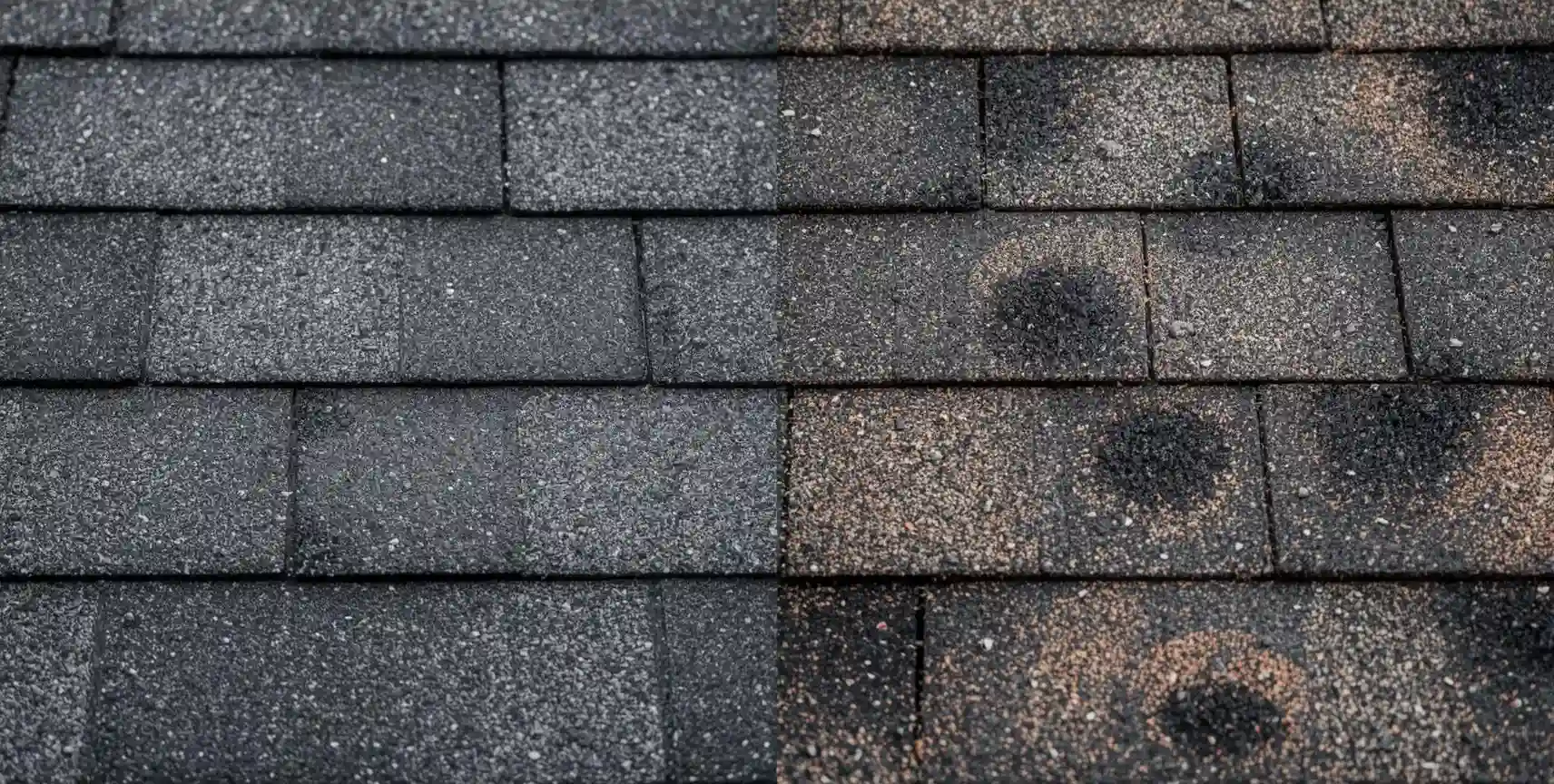
On the roof surface, hail damage often appears as scattered impact marks rather than a clear pattern. Some areas may look darker where granules have been knocked away. Others may have small dents or subtle inconsistencies that weren’t there before.
Because Denver sees frequent hailstorms, sometimes multiple in a season, these small signs can add up over time. What looks like minor wear may actually be the result of repeated storm impact.
The challenge is that none of these signs feel urgent on their own.
But together, they help answer a more important question: has your roof been compromised in a way that could lead to bigger issues later?
If you’re noticing any of these changes after a storm, it’s usually a good indication that your roof is worth a closer look, even if everything seems “fine” at first glance.
Common signs of hail damage on asphalt shingles
On asphalt shingles, hail damage typically shows up in ways that are easy to overlook if you don’t know what you’re looking for.
The most common sign is impact bruising, areas where the shingle has been struck hard enough to weaken the structure beneath the surface. These spots may not always be visible, but when touched, they can feel soft or slightly spongy compared to surrounding areas.
You’ll also often see granule loss, where the protective outer layer has been knocked away. This can expose the darker asphalt underneath, creating small, irregular patches that don’t match the rest of the roof.
In some cases, there are visible dents or circular impact marks, but these aren’t always dramatic. They can be subtle, especially on older roofs.
What’s important is the pattern.
Hail damage doesn’t appear evenly across the roof. It shows up randomly: different sizes, different locations, different intensities.
That randomness is one of the clearest indicators that what you’re seeing is storm-related, not just normal wear.
What hail damage looks like on different roof materials
Hail doesn’t affect every roof the same way, and that’s where a lot of confusion comes from.
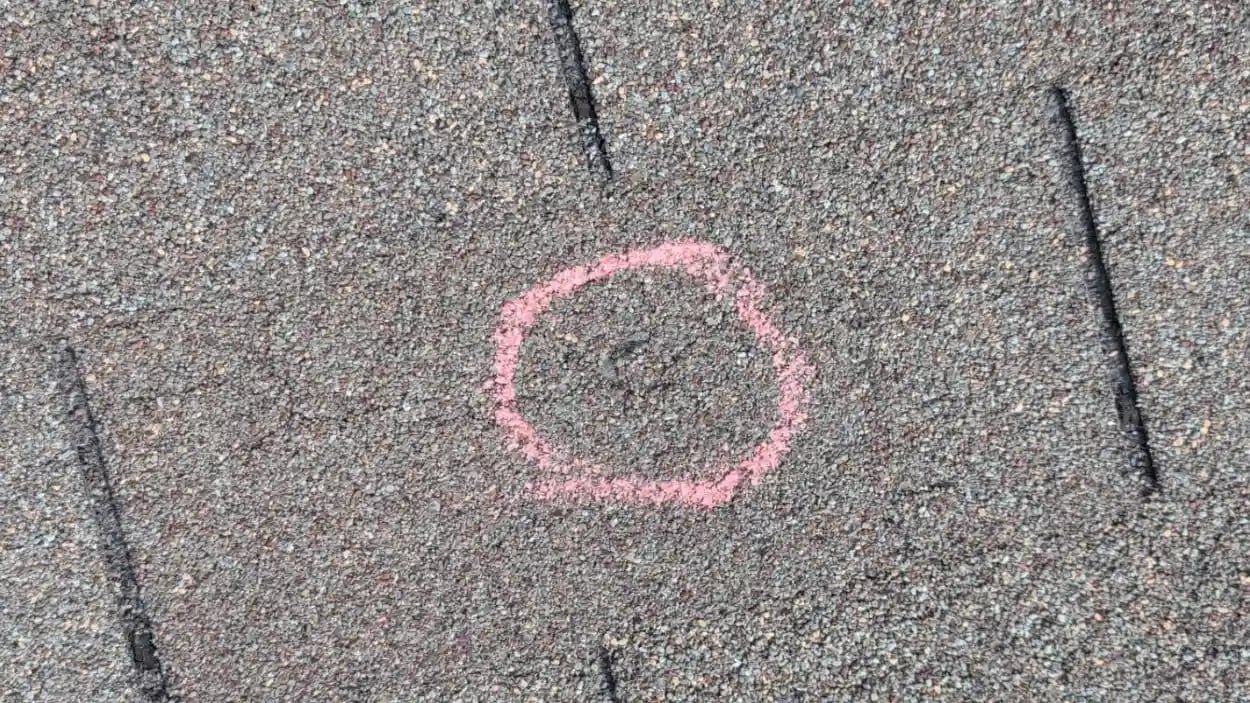
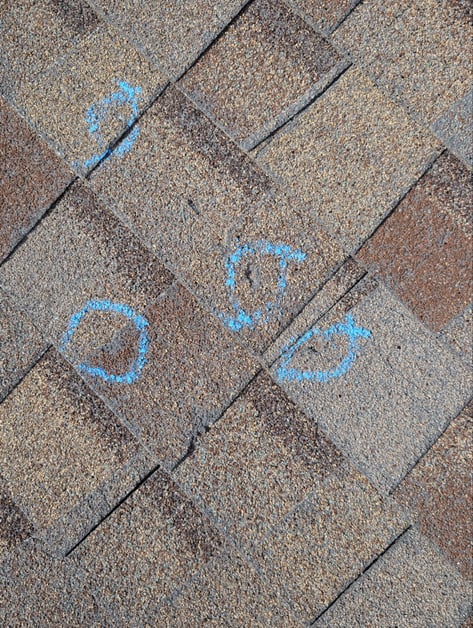
On asphalt shingles, damage typically shows up as impact points that compromise the surface. You may see areas where granules have been knocked away, exposing darker patches underneath, or spots that look slightly dented or feel softer than the surrounding material.
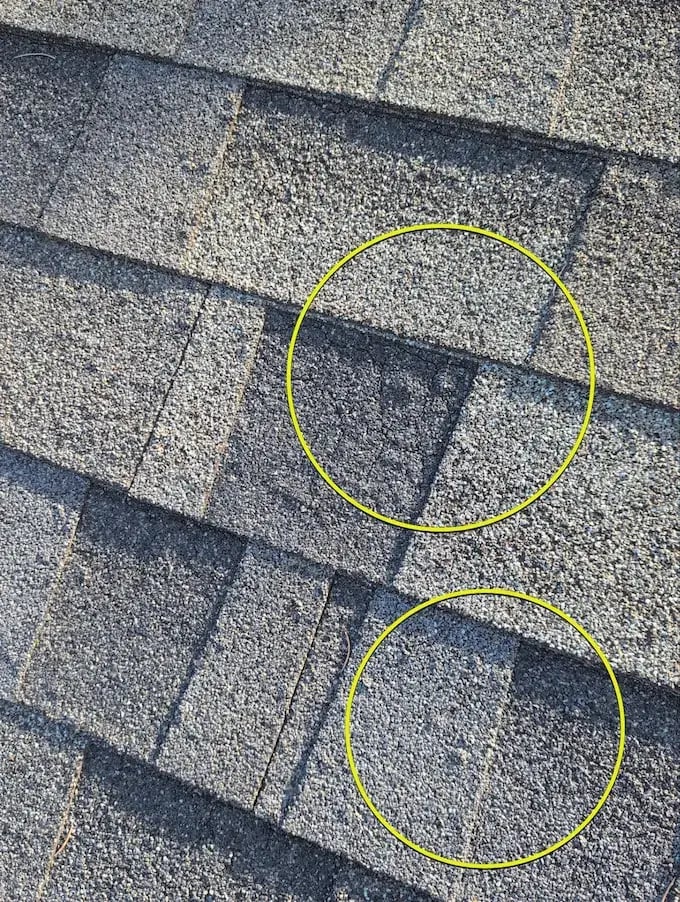
In the images below, notice the circled areas. These highlight impact points where granules have been stripped away. The darker spots within those circles are where the underlying asphalt is exposed.
These marks tend to be scattered, not uniform, which is one of the clearest signs of hail-related damage.
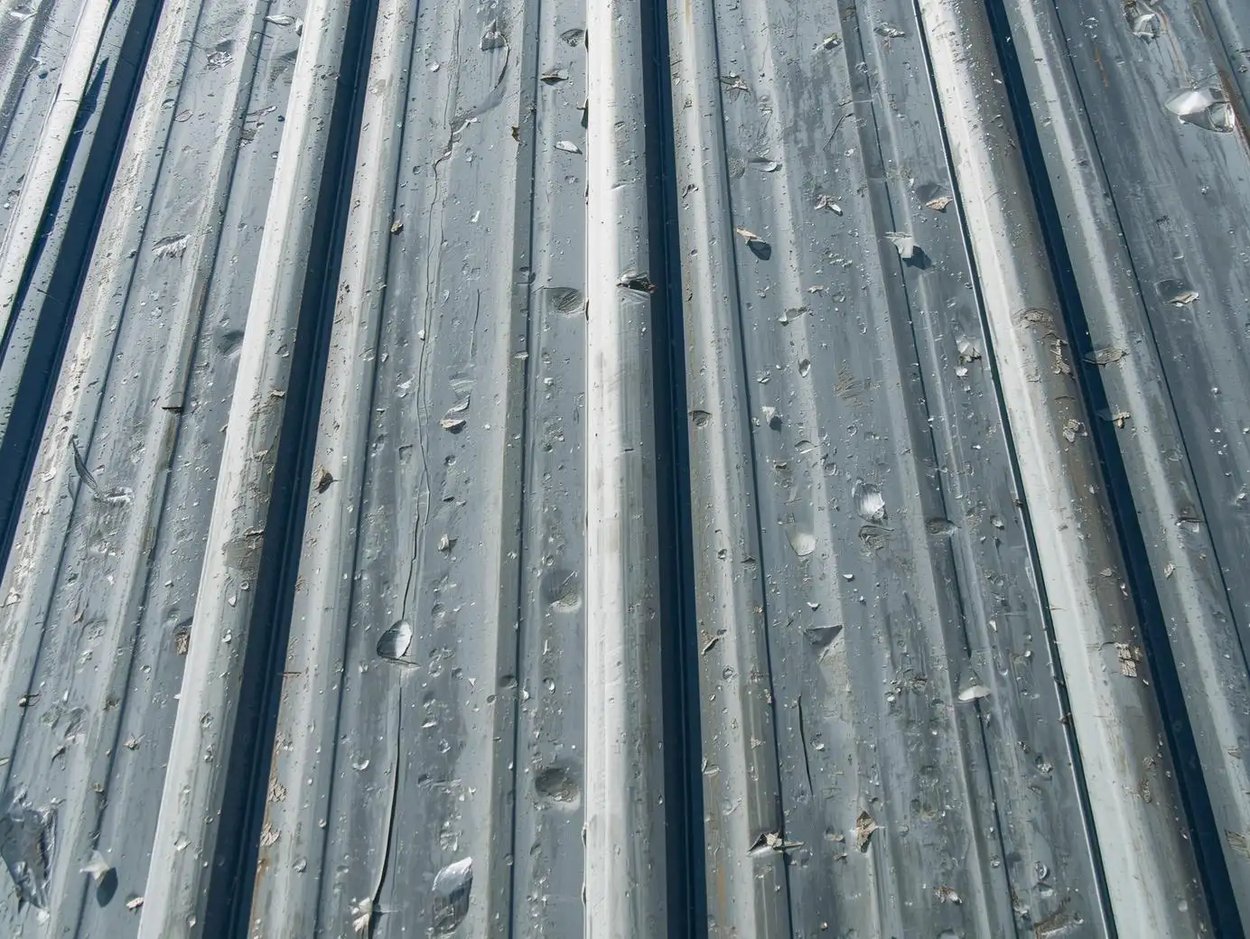
On metal roofs, the signs are usually more visible. Hail often leaves behind small dents or dimples, especially on softer metals.
You can see this in the image below, where the surface of the metal shows multiple small indentations across different panels. While these don’t always cause immediate leaks, they can still affect the integrity and lifespan of the material over time.
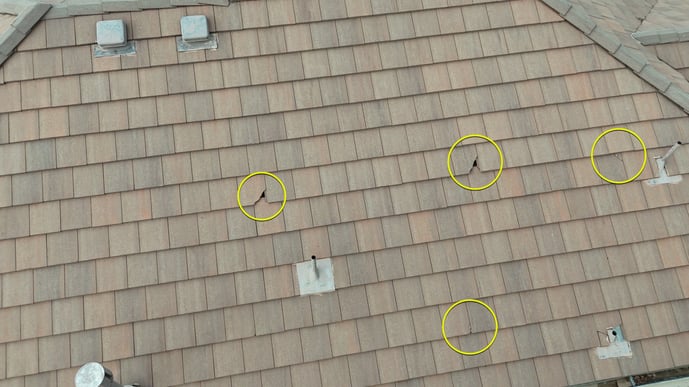
With tile roofs, the damage is often more structural. Hail can cause cracks, chips, or even break sections of the tile entirely.
In the example shown, the circled areas highlight cracked or chipped tiles, some of which may not be immediately obvious unless you’re looking closely. These types of fractures can allow water in over time if left unaddressed.
On flat roofing systems, hail damage tends to show up as surface-level impact. Things like small punctures, membrane bruising, or areas where the top layer has been worn down.
In the image here, notice the subtle circular marks on the membrane. These are impact points that may not look severe but can compromise the surface and lead to water intrusion over time.
%20(1).webp?width=689&height=689&name=image%20(1)%20(1).webp)
The key takeaway is this: Hail damage doesn’t have one consistent look.
It depends on the material, the age of the roof, and the severity of the storm.
That’s why relying on a single “expected” sign can be misleading and why damage is often missed when homeowners assume it should look the same everywhere.
How hail damage can affect different parts of your roof
Hail doesn’t just impact shingles; it affects the entire roofing system, and in many cases, the most visible damage shows up away from the main roof surface.
On the shingles themselves, you may see impact marks or granule loss. But just as often, the clearer signs show up on flashing, where metal can bend slightly or loosen around seams and penetrations. These areas are already vulnerable, so even minor impact can create long-term issues.
Vents and roof penetrations are another common impact point. Hail can leave dents in metal vent covers or weaken seals around them, which increases the risk of water intrusion over time.
Along the peak of the roof, ridge caps take direct hits during a storm. Damage here can be easy to miss from the ground, but it can affect how well the roof sheds water and protects against wind-driven rain.
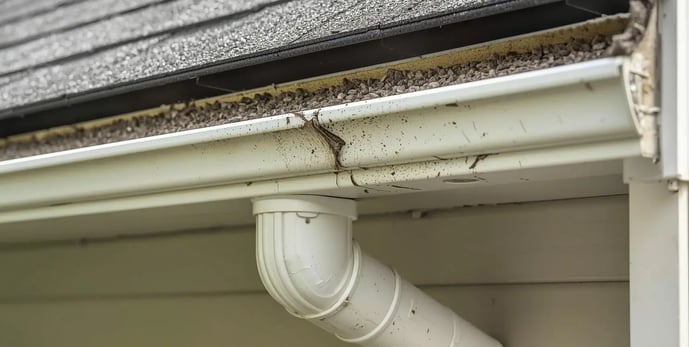 And then there are the gutters and downspouts, often the most obvious place to spot hail damage. Dents, dings, or an unusual buildup of granules can help confirm that your home took a direct hit, even if the roof itself doesn’t look significantly damaged at first glance.
What this really highlights is that hail damage isn’t isolated, it’s systemic.
Focusing only on shingles can give you an incomplete picture. A proper evaluation looks at how all these components work together, and how each one may have been affected by the storm.
If you’re only checking the most visible areas, there’s a good chance you’re missing part of the story.
How to Tell the Difference Between Roof Blistering vs. Hail Damage
One of the most common and costly points of confusion for homeowners is figuring out whether they’re looking at storm damage or just normal roof aging.
At a glance, the two can look similar. Both can leave marks on the surface of your shingles. Both can change the way your roof looks or feels. And unless you’ve seen the difference before, it’s easy to assume they’re the same thing.
The challenge is that they lead to very different decisions.
In one case, you may simply be dealing with natural wear over time. In the other, your roof may have been compromised by a recent storm and could require more immediate attention.
Getting that distinction wrong can mean either overlooking real damage or taking action when it’s not necessary.
That’s why understanding what you’re looking at matters and why, in some cases, having a professional evaluate it can help remove the uncertainty.
What roof blistering looks like
Roof blistering is a form of material breakdown that happens over time, not from a single event.
It occurs when heat and moisture become trapped within the layers of the shingle, causing pressure to build beneath the surface. As that pressure increases, small pockets begin to form, eventually pushing upward and creating visible raised areas.
From a visual standpoint, blistering typically shows up as small bubbles or pockmarks across the surface of the shingles. In some cases, these bubbles can rupture, leaving behind exposed spots where the protective granules have worn away.
One of the key characteristics of blistering is consistency.
Because it’s caused by environmental conditions like heat, ventilation, and material aging, it tends to appear in a more uniform or widespread pattern across sections of the roof, not randomly scattered like hail damage.
It also develops gradually. You won’t usually notice blistering immediately after a specific event. Instead, it becomes more visible over time as the roof continues to age and break down.
That’s the important distinction:
Blistering is a slow, internal process tied to wear and conditions, while hail damage is the result of sudden, external impact.
Understanding that difference helps you avoid misreading normal aging as storm damage or overlooking real issues when they actually matter.
Key differences between blistering and hail impact marks
At a glance, blistering and hail damage can look similar, but the way they form and the patterns they leave behind are very different.
The easiest way to tell the difference is to look at how the marks appear, when they showed up, and how consistent they are across the roof.
|
Feature |
Roof Blistering | Hail Damage |
|---|---|---|
| Cause | Heat, moisture, and material aging | Impact from a hailstorm |
| Timing | Develops gradually over time | Happens suddenly during a storm |
| Pattern | More uniform or widespread | Random and scattered |
| Appearance | Small bubbles or raised areas, sometimes ruptured | Dents, impact marks, or areas of granule loss |
| Location | Often consistent across sections of the roof | Varies depending on where hail hit |
| What triggered it | No specific event | Typically noticeable after a storm |
In practice, most homeowners don’t need to diagnose this perfectly, they just need to know what to watch for.
If the marks on your roof appeared suddenly after a storm, don’t follow a clear pattern, or are paired with other signs like dents in gutters or flashing, that usually point toward hail damage.
If the changes seem to have developed slowly over time and appear more evenly across the roof, it’s more likely related to normal wear.
And if you’re somewhere in between, which is often the case, that’s usually a sign it’s worth getting a second set of eyes on it.
Why a professional inspection matters
Hail damage is one of the easiest things for homeowners to misidentify.
From the ground, most roofs look the same, especially after a storm. And even up close, the difference between minor wear and actual impact damage isn’t always obvious without experience.
That’s where problems start.
Marks that look harmless may actually indicate compromised shingles. At the same time, normal aging can sometimes look like damage, leading homeowners to assume something is wrong when it isn’t.
A professional inspection removes that uncertainty by focusing on how the roof is functioning, not just how it looks.
An experienced roofer evaluates whether impact has weakened the structure of the shingle, whether protective layers have been compromised, and whether the damage is cosmetic or something that affects performance.
Most inspections also include photo documentation of specific areas of concern, giving you a clear record of what’s happening and helping guide next steps, whether that’s monitoring, repairs, or further action after a storm.
If you’re unsure what you’re seeing, the easiest way to get a clear answer is to schedule a roof inspection, so you know exactly where things stand without having to guess.
It doesn’t commit you to anything; it just gives you clarity on what’s actually going on with your roof.
Why Hail Damage to Roof Shingles is Easy to Miss
The challenge with hail damage isn’t always how severe it is; it’s how subtle it can be, especially at the beginning.
Most damage doesn’t show up as something obvious, like missing shingles or immediate leaks. Instead, it starts as small impact points that don’t change the overall look of the roof from the ground.
From a homeowner’s perspective, everything can appear normal.
That’s because the earliest signs, like minor granule loss or slight weakening beneath the surface, don’t always create visible changes right away. The roof is still doing its job, so there’s no immediate reason to question it.
Over time, though, those small areas of impact can begin to matter more.
As the protective layer of the shingles wears down, the roof becomes more vulnerable to moisture, temperature changes, and continued exposure. What started as minor damage can gradually affect how the roof performs.
This is why timing matters.
Catching hail damage early doesn’t just confirm whether there’s an issue; it gives you more flexibility in how you handle it. Waiting until there are visible symptoms, like leaks or interior damage, usually means the problem has already progressed.
And because Denver sees frequent hail activity, it’s not always one storm that causes issues; it’s the accumulation of smaller impacts over time.
If your roof has been through recent storms and everything looks “fine,” that’s often when it’s worth taking a closer look, before subtle damage has a chance to turn into something bigger.
Subtle signs homeowners may overlook
The earliest signs of hail damage are rarely obvious.
In many cases, homeowners aren’t looking at their roof closely enough to notice the small changes that signal a problem.
One of the most overlooked indicators is granule accumulation in gutters. After a storm, you might see what looks like dark, sandy debris collecting in downspouts. That’s often a sign that the protective layer of your shingles has been compromised.
Another subtle sign is damage near edges and transitions, areas like roof valleys, flashing, and around vents. These sections take more direct impact and tend to show wear first.
Metal components can also tell a story. Small dents in vents, flashing, or gutters often confirm hail activity, even when the shingles themselves don’t look obviously damaged.
On their own, these signs may not feel urgent.
But together, they create a pattern, and that pattern is what matters.
How hidden hail damage can lead to bigger problems
Hail damage doesn’t usually fail all at once; it weakens your roof over time.
When impact damages the surface of a shingle, even slightly, it can compromise the protective layer that shields your roof from water and weather. At first, that may not cause any visible issues. The roof still looks intact and continues to perform.
But underneath, things begin to change.
As those impacted areas are exposed to sun, rain, and temperature swings, they wear down faster than the rest of the roof. Over time, this can create entry points for moisture, especially around seams, edges, and penetrations.
That’s when problems like slow leaks and moisture intrusion begin to develop.
And because this process is gradual, the first signs often show up inside the home, such as water stains, soft spots, or insulation issues, well after the original damage occurred.
There’s also a broader impact on the lifespan of the roof.
Even if leaks don’t happen immediately, compromised shingles don’t last as long. What could have been years of remaining life can be shortened significantly, especially in a climate like Denver, where roofs are already under constant stress.
The biggest issue, though, is timing.
When damage is caught early, repairs are often more limited and manageable. When it’s discovered later, after moisture has had time to spread, the scope of work increases, and so does the cost.
What starts as a few impacted areas can turn into a much larger repair simply because it wasn’t addressed early.
When to Schedule a Hail Damage Roof Inspection
You don’t need to react to every storm, but you also don’t want to wait until there’s a visible problem.
In a place like Denver, where hailstorms are frequent, the decision usually comes down to timing and context. It’s less about one obvious sign and more about whether recent conditions and small signals point to potential damage.
The goal isn’t to assume something is wrong; it’s to avoid missing something that could become a bigger issue later.
What to do after a hailstorm
After a storm, the first step is simple: check what you can safely see from the ground.
Look at your gutters and downspouts for dents or an unusual buildup of granules. Scan the roof for anything that looks different: discoloration, debris, or areas that weren’t there before.
You’re not trying to diagnose the problem. You’re looking for change.
If something looks off, that’s usually enough of a signal to keep paying attention.
One important note: avoid climbing onto the roof yourself. Most hail damage isn’t obvious without experience, and walking on a potentially compromised roof can cause more harm than good.
Signs you need a roof inspection in Denver
In many cases, the biggest trigger isn’t what you see, it’s what just happened.
If your area experienced a noticeable hailstorm, especially with larger hail or strong winds, that alone can justify taking the next step.
Beyond that, there are a few signs that tend to indicate it’s worth having your roof evaluated:
- Dents or dings on gutters, vents, or flashing
- Granules collecting in downspouts after a storm
- Sections of the roof that look darker or inconsistent
- Any signs of moisture inside the home
None of these guarantee major damage, but they reduce the margin for guessing.
In Denver, where roofs are exposed to repeated hail events, even smaller storms can contribute to cumulative wear. That’s why timing matters just as much as severity.
If you’re noticing any combination of these signals, or simply know your home took a direct hit, it’s usually enough reason to get clarity on the condition of your roof.
What a professional roof inspection includes
A professional inspection is designed to answer one question clearly: is your roof still performing the way it should?
That starts with a detailed evaluation of the roof surface, looking for impact damage like granule loss, bruising, or structural weakening in shingles.
From there, the inspection expands to the areas where problems often show up first: flashing, vents, ridge caps, and other penetrations. Gutters and downspouts are also checked, since they often provide the clearest evidence of storm impact.
Most reputable contractors will include photo documentation of specific areas, so you’re not relying on a verbal explanation alone. You can see exactly what’s happening and where.
But the real value is in what comes next.
The roof inspection helps determine:
- Whether the damage is cosmetic or affects performance
- Whether repair is sufficient or replacement should be considered
- How urgent the issue is
Instead of guessing, you’re making a decision based on a clear understanding of the condition of your roof.
If you’ve had a recent storm and aren’t sure where things stand, scheduling an inspection is the most straightforward way to get that clarity.
Why Hail Damage is a Common Problem in Denver
Hail damage in Denver isn’t occasional; it’s expected.
The Front Range sees some of the most frequent and severe hailstorms in the country, often multiple times throughout the year. For homeowners, that means your roof isn’t just exposed to one event; it’s exposed to repeated impact over time.
And that changes the equation.
It’s not just about whether a single storm caused damage. It’s about how each storm contributes to the overall wear on your roof and how quickly that wear adds up.
How Colorado weather affects roofing materials
Roofing materials in Colorado are constantly under stress.
Hail is the most obvious factor, but it’s not the only one. Intense UV exposure at higher elevations, combined with rapid temperature swings between day and night, causes materials to expand, contract, and gradually break down.
Over time, this weakens the structure of shingles and other roofing components, making them more susceptible to impact.
So when hail hits, even if it’s not a major storm, the roof may already be in a more vulnerable state than it would be in a milder climate.
That’s why damage in Colorado isn’t always tied to one dramatic event; it’s often the result of cumulative stress meeting sudden impact.
Why Denver Homeowners Should Act Quickly After Hail
In a market like Denver, timing matters just as much as the damage itself.
Because storms are frequent, it’s easy to assume you can wait, or that what you’re seeing isn’t urgent. But the longer damage goes unconfirmed, the more likely it is to develop into something that’s harder to manage.
The goal isn’t to overreact to every storm. It’s to understand what you’re dealing with early, so you can make the right decision before small issues turn into larger ones.
Why acting early matters after a hailstorm
After a storm, the biggest risk isn’t always the damage itself, it’s uncertainty.
When impact goes unchecked, even minor areas of damage can begin to break down further under sun exposure, temperature swings, and moisture. What may have started as surface-level impact can gradually affect how your roof performs over time.
Early inspection allows you to:
- Confirm whether damage is present
- Address issues before they escalate
- Make informed decisions about repair vs. replacement
It also plays an important role in planning next steps.
If damage is significant, having clear documentation early makes it easier to understand your options, whether that involves repairs, replacement, or exploring coverage through your insurance provider.
In a hail-prone area like Denver, acting early isn’t about urgency for urgency’s sake; it’s about maintaining control over the situation.
Considering Class 4 impact-resistant shingles after hail damage
For homeowners who experience repeated hail exposure, this is often the point where upgrading materials becomes part of the conversation.
Class 4 impact-resistant shingles are specifically designed to better withstand hail by absorbing impact and reducing surface damage. In a market like Denver, where storms are frequent and often repeat, that added durability can make a meaningful difference over time.
Beyond performance, there can also be financial considerations.
In some cases, insurance providers may offer premium discounts for homes with Class 4 shingles installed, since they can reduce the likelihood of future claims. While this varies by carrier and policy, it’s a common factor homeowners evaluate when thinking about long-term cost, not just the initial replacement.
For many homeowners, the decision isn’t just about repairing damage, it’s about whether to rebuild with the same materials or upgrade to something more resilient moving forward.
Not every situation requires that step. But after multiple storms or more significant damage, it’s often worth considering as part of a longer-term solution.
If you’re not sure what makes sense for your roof, scheduling an inspection can help you understand your options and make a more informed decision.
Hail Damage Frequently Asked Questions (FAQ)
Know What Hail Damage Looks Like and Act Early
Hail damage doesn’t always show up as something obvious, but there are clear signs that your roof may have been affected.
Scattered impact marks, areas of granule loss, soft spots on shingles, or dents on gutters and vents are all indicators that your roof may have taken a hit. In many cases, the damage isn’t uniform, and it won’t always be visible from the ground, which is why it’s so often overlooked.
In Denver, where hailstorms are frequent and often repeat throughout the year, even minor damage can add up over time. What starts as a few impacted areas can gradually affect how your roof performs, especially if it’s left unaddressed.
That’s why acting early matters.
The goal isn’t to assume the worst, it’s to understand what you’re dealing with before small issues turn into larger ones. When damage is caught early, you have more flexibility in how you handle it, whether that’s monitoring, repair, or planning next steps.
If you’ve recently had a storm and aren’t sure where things stand, the easiest way to get a clear answer is to schedule a roof inspection, so you know exactly what’s going on without having to guess.
What to Know About Hail Damage Roof Insurance Claims in Denver
High Impact Team
6 min. read
How Much Hail Damage Does It Take to Replace a Roof?
High Impact Team