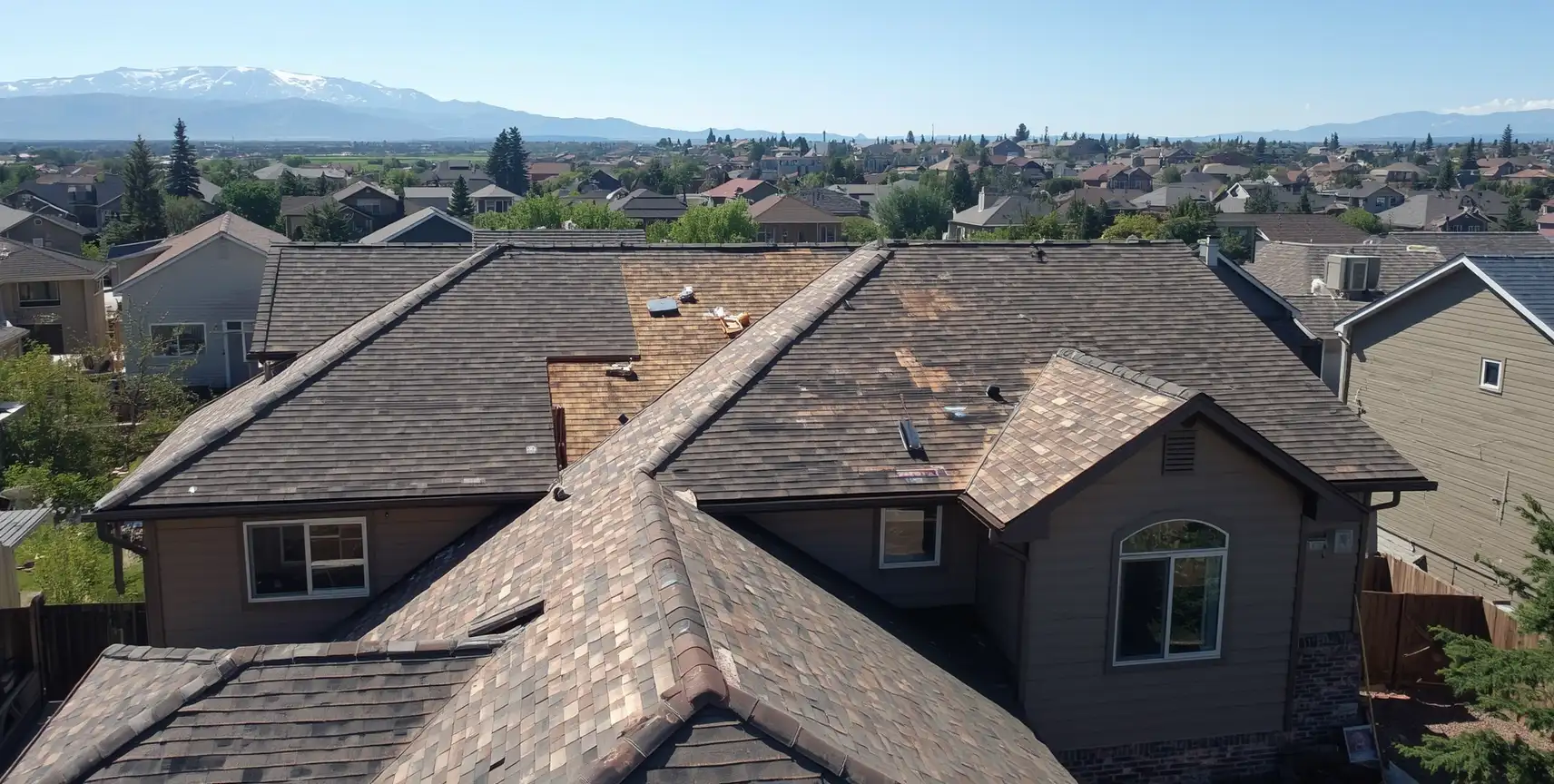
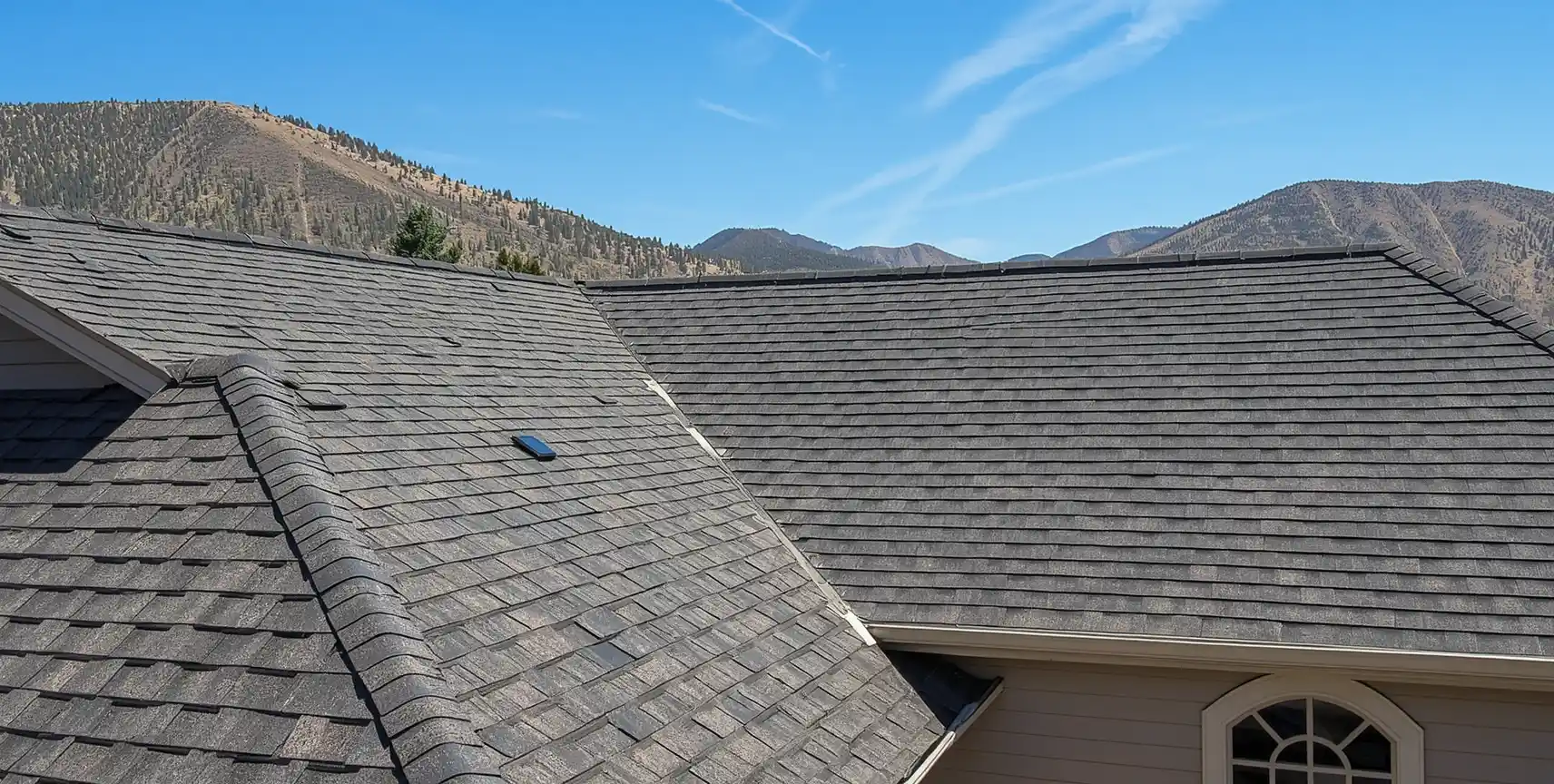
In Colorado, hail damage is not always obvious right away. A roof may look mostly intact from the ground, while hidden bruising, granule loss, or weakened shingles continue deteriorating long after the storm passes.
Homeowners across the Denver metro area, from Littleton and Lakewood to Highlands Ranch and Aurora, often experience very different roof outcomes after the same storm depending on the condition and age of their roofing system.
That is why one of the most common questions homeowners ask after severe weather is: "How much hail damage to replace a roof?"
The reality is there is no single threshold. Two homes in the same neighborhood can go through the exact same hailstorm and end up with completely different outcomes depending on the roof’s age, material, prior storm exposure, and how the damage is distributed across the system.
For Denver-area homeowners, understanding how replacement decisions are actually made can help you avoid missed damage, insurance issues, and costly long-term roof problems.
What Determines Whether Hail Damage Requires Repair or Replacement?
Roof replacement decisions are rarely based on one obvious issue, like a single cracked shingle or visible leak. In most cases, contractors and insurance adjusters are evaluating the overall condition and performance of the roofing system after the storm.
The decision usually comes down to a combination of factors, including hail impact force, roof age, material type, prior wear, and how consistently the damage appears across different areas of the roof.
Rather than looking for one dramatic point of failure, inspectors are typically trying to determine whether the roof can still perform reliably long term or whether the storm has created widespread functional damage that makes replacement the safer option.
Hail Size and Impact Energy
Hail size alone does not determine whether a roof qualifies for replacement. What matters more is the combination of impact force, storm duration, wind speed, and how consistently the roof surface was hit.
For example, quarter-sized hail may leave little visible damage on a newer Class 4 roof, while the same storm can cause significant bruising and granule loss on an older asphalt shingle roof that has already weathered multiple Colorado hail seasons.
Roof inspectors also look beyond obvious cracks or punctures. Repeated impacts from smaller hail can gradually loosen granules, weaken shingles, and reduce the roof’s ability to shed water properly over time. In many cases, cumulative storm exposure is what pushes a roof from repairable damage into full replacement territory.
Roof Age and Condition Before the Storm
Roof age plays a major role in whether hail damage can realistically be repaired or whether replacement becomes the safer long-term option.
On older roofs, shingles are typically more brittle, seal strips may already be weakening, and years of UV exposure can reduce the roof’s ability to absorb additional impact. That means a storm that causes only cosmetic damage on a newer roof may create fractures, lifted shingles, or accelerated deterioration on an aging system.
Age also affects repair feasibility. Even when damage is isolated, older shingles may no longer be manufactured, making material and color matching difficult. In some cases, spot repairs on heavily weathered roofs can create uneven performance across the roofing system and increase the likelihood of future problems.
For insurers, prior wear and overall roof condition also influence claim evaluations. In Colorado, where roofs often experience repeated hail seasons over many years, cumulative deterioration frequently becomes part of the replacement discussion.
In areas like Aurora and Parker, where roofs may go through repeated hail seasons over many years, cumulative storm wear often becomes a major factor in replacement decisions.
Roofing Material and Impact Resistance Rating
The roofing material installed can significantly influence how severe hail damage becomes and whether insurance carriers lean toward repair or replacement.
Standard asphalt shingles tend to absorb hail impacts unevenly over time. Larger storms can loosen granules, fracture the fiberglass mat beneath the surface, and weaken the seal between shingles, even when damage is not immediately visible from the ground.
Class 4 impact-resistant roof systems are designed to withstand higher-impact strikes without splitting or exposing the underlying roof structure as easily as standard shingles. In some cases, homeowners with impact-resistant roofing experience significantly less damage during Colorado hailstorms than neighboring properties with traditional asphalt roofing.
Many homeowners in hail-prone communities like Castle Rock and Highlands Ranch have increasingly moved toward Class 4 roofing systems after repeated severe storm seasons.
That said, impact resistance does not make a roof hail-proof. Large hail, repeated storm exposure, aging materials, and vulnerable roof features like flashing, vents, and ridge caps can still lead to replacement-level damage over time.
Number of Hits and Coverage Density
One dramatic hail impact is usually not what drives roof replacement decisions. What matters more is how widespread the damage is across the roof surface.
During inspections, adjusters and roofing contractors often evaluate “test squares” to determine how many shingles within a defined area show functional damage. If damage appears consistently across multiple slopes and elevations, replacement becomes far more likely because the roof system has been compromised as a whole.
By contrast, isolated damage limited to one area may still be repairable, especially on newer roofs where matching materials remain available.
This is one reason two roofs exposed to the same storm can receive completely different insurance outcomes. Distribution and consistency of damage matter just as much as hail size itself.
Signs That Hail Damage to Roof Shingles May Require Full Replacement
Not all hail damage carries the same long-term risk.
Some storm impacts create primarily cosmetic issues, while others compromise the roof’s ability to properly shed water and protect the home over time. The challenge for many homeowners is that replacement-level damage is not always obvious from the ground immediately after a storm.
During inspections, roofing contractors and insurance adjusters look for specific patterns that suggest the roof system has sustained widespread functional damage rather than isolated surface wear. The signs below are some of the most common indicators that a roof may be approaching replacement territory rather than simple repair.
Widespread Granule Loss Across the Roof Surface
Granules are the outer protective layer that shields asphalt shingles from UV exposure and long-term weathering.
After a hailstorm, significant granule loss may appear as dark spots, shiny patches, or uneven-looking sections across the roof. Homeowners may also notice excessive granules collecting in gutters and downspouts.
The concern is not simply cosmetic appearance. Once granules are stripped away, shingles become more vulnerable to UV deterioration, moisture intrusion, and accelerated aging. In Colorado’s intense sun and fluctuating weather conditions, that deterioration can progress quickly after a storm.
When granule loss is widespread across multiple roof sections, replacement is often recommended because the overall lifespan of the roofing system has been significantly reduced.
This is especially common on older roofs throughout the Front Range, where intense UV exposure and repeated hailstorms accelerate long-term shingle deterioration.
Bruising, Cracking, or Punctures in Shingles
Some of the most important hail damage is difficult to see from the ground.
Hail impacts can create soft bruises beneath the shingle surface that compromise the fiberglass mat underneath. Even when shingles still appear mostly intact, the structural integrity of the roofing material may already be weakened.
Cracks and punctures are more obvious warning signs because they create direct pathways for water intrusion. However, bruising is often what leads to delayed roof problems months after a storm, especially once shingles expand and contract through seasonal temperature changes.
This is why roofs that initially appear “fine” after a hailstorm sometimes begin leaking later.
Damage to Flashing, Vents, and Gutters
Hail damage rarely affects shingles alone.
Roof inspectors also examine flashing, gutters, roof vents, ridge caps, garage doors, and other soft metal components around the property. Dents and impact marks on these materials often help establish the severity and direction of the storm itself.
In many insurance inspections, soft metal damage serves as supporting evidence that the roof likely sustained meaningful impact damage as well. This collateral damage can become especially important when shingle bruising is harder to identify visually.
Active Leaks or Interior Water Damage
Interior leaks often indicate that roof damage extends beyond the outer shingle layer.
Water stains on ceilings, attic moisture, bubbling paint, or active leaks after a hailstorm may signal compromised underlayment, damaged flashing, or deeper roofing system failures beneath the surface.
In many cases, visible interior symptoms appear well after the storm itself. By the time moisture becomes noticeable inside the home, damage may already have progressed significantly.
After major storms in areas like Westminster or Lakewood, some homeowners may not notice interior leak symptoms until weeks or months later.
If interior water damage appears after hail activity, homeowners should schedule a professional roof inspection as soon as possible.
When Hail Damage Roof Repair May Be Enough
While severe or widespread hail damage often pushes a roof toward replacement, not every storm creates enough functional damage to justify replacing the entire system.
In many cases, the deciding factor is whether the damage is isolated and whether the surrounding roofing materials are still in good enough condition to support a long-term repair. Roof age, shingle brittleness, material availability, and how concentrated the storm impacts are all influence whether repairs are likely to hold up over time.
For homeowners, the challenge is that repairable damage and replacement-level damage can sometimes look very similar from the ground. That is why professional inspections focus not only on visible impacts but also on how the overall roofing system is expected to perform moving forward.
Isolated Damage to a Small Section of the Roof
If damage is limited to one slope or a relatively small section of the roof, repairs may be possible without replacing the full roofing system.
However, the long-term success of a repair depends heavily on the roof’s age and condition. On older roofs, shingles can become brittle enough that surrounding materials may crack or fail during the repair process itself.
Matching also becomes more difficult over time. Older shingles may be faded, discontinued, or weathered differently than newer replacement materials, which can affect both appearance and performance.
A professional inspection can help determine whether a repair is likely to hold up long-term or whether replacement would ultimately be the more cost-effective solution.
Minor Granule Loss Without Underlying Shingle Damage
Not all granule loss automatically means a roof needs replacement.
Minor surface wear without bruising, cracking, punctures, or exposed fiberglass matting may still fall within repairable territory. However, documenting that damage still matters, especially in Colorado, where repeated hail exposure over multiple seasons can gradually compound over time.
Across the Denver metro area, repeated seasonal hail exposure can gradually compound even when individual storms appear minor at first.
Even if replacement is not necessary immediately, professional documentation creates a baseline record of storm-related wear that may become important during future inspections or insurance claims.
How the Hail Damage Roof Replacement Insurance Claim Process Works
Determining whether a hail-damaged roof qualifies for replacement is not based on a single cracked shingle or one visible leak. Insurance carriers evaluate whether the storm created enough functional damage across the roofing system to justify full replacement instead of localized repairs.
That process can become complicated because hail damage is often subjective. Two inspectors may look at the same roof and reach different conclusions depending on how they interpret bruising, granule loss, shingle fractures, prior roof wear, and overall storm severity.
For homeowners, understanding how claims are evaluated is important because insurance approval is not simply about whether damage exists. It is about whether the damage meets the carrier’s threshold for replacement, how thoroughly the roof is documented, and whether important components or code-required items are included in the scope of work.
The sections below break down how adjusters assess hail damage, what documentation matters most during the claim process, and why supplements are sometimes necessary before a roof replacement is fully approved.
How Insurance Adjusters Assess Hail Damage
Insurance adjusters typically inspect roofs using test squares, hit counts, collateral damage indicators, and signs of functional shingle failure.
The distinction between cosmetic and functional damage is important. Cosmetic dents alone may not justify replacement, while bruising, fractured shingles, compromised seal strips, or moisture vulnerabilities are more likely to support a replacement claim.
Adjusters also evaluate damage distribution across multiple roof slopes, prior roof condition, and supporting evidence like soft metal impacts.
Because some forms of hail damage are subtle, disagreements between contractors and insurance carriers are not uncommon. That is one reason many homeowners choose to have a roofing contractor present during the adjuster inspection process.
What High Impact Includes in a Hail Damage Inspection Report
At High Impact Roofing & Exteriors, hail inspections include detailed photo documentation, test squares, impact analysis, and full roof scope evaluations designed to support the insurance claim process.
The inspection process helps identify overlooked damage, code-required items, and roofing components that may not initially appear on the insurance scope. This includes things like flashing, drip edge, ventilation components, ice and water shield requirements, and other items that can significantly affect the true cost of restoring the roof properly.
Detailed documentation also helps create a clearer record of storm-related damage if supplemental claims become necessary later in the process.
What Happens if the Insurance Scope Is Missing Items
Insurance scopes are not always complete after the initial adjuster inspection.
Commonly missed items can include ice and water shield, drip edge, flashing replacement, ventilation updates, decking replacement, and local code-required upgrades. In some cases, these omissions can create major gaps between what insurance initially approves and what is actually needed to restore the roof properly.
That is where supplemental claims become extremely important.
A supplemental claim is the process of submitting additional documentation, code requirements, material needs, or overlooked damage back to the insurance carrier for review after the original scope is written. For homeowners, this process can significantly impact how much of the project is ultimately covered.
High Impact Roofing regularly works with Front Range insurance adjusters and has extensive experience identifying missing scope items, documenting overlooked damage, and managing supplemental claims throughout the restoration process. In many cases, this helps ensure homeowners are not left absorbing costs for roofing components that should have been included in the original claim.
Why ACV vs RCV Coverage Matters More Than Ever After Hail Damage
For many homeowners, the biggest factor determining whether they can realistically afford roof replacement after a major hailstorm is no longer just the damage itself. It is the type of insurance coverage attached to the roof.
Replacement Cost Value (RCV) policies are designed to cover the cost of replacing the roof at current market pricing, minus the homeowner’s deductible. Actual Cash Value (ACV) policies, however, factor depreciation into the payout based on the roof’s age and condition.
That difference can become substantial on older roofs. In some cases, homeowners may receive thousands of dollars less than the actual replacement cost after a severe storm.
This became even more important following the March 2026 FHFA rule change allowing mortgage-backed homes backed by Fannie Mae and Freddie Mac loans to carry ACV roof coverage instead of requiring full RCV coverage.
For Colorado homeowners in hail-prone areas, understanding whether a roof is covered under ACV or RCV terms can significantly impact future out-of-pocket costs after storm damage.
For homeowners throughout the Denver metro area, especially in older suburban neighborhoods with aging roofs, this policy difference can create substantial out-of-pocket costs after severe storms.
How to Know for Certain if Your Roof Needs Replacement After Hail
The biggest mistake many homeowners make after a hailstorm is assuming that no visible damage means the roof is fine.
Some of the most serious hail damage develops beneath the surface and may not become obvious until leaks, lifting shingles, or accelerated deterioration appear months later.
Waiting too long can also complicate insurance claims, especially after multiple storms hit the same property over time.
A professional, free, same-week hail inspection helps document the current condition of the roof, identify hidden damage early, and determine whether repairs are realistic or whether replacement makes more sense long term.
If your property recently experienced a major hailstorm in the Denver metro area, scheduling an inspection early can help prevent more expensive problems later.
What Hail Damage Can Cost Homeowners in Colorado
The financial impact of hail damage can vary significantly depending on whether the roof ultimately qualifies for repair or full replacement.
In many cases, localized hail repairs may range from roughly $1,500 to $5,000 depending on the extent of the damage, roofing material, and whether matching shingles are still available.
Full roof replacement projects across the Denver metro area often range between $15,000 and $25,000 or more depending on roof size, material type, slope complexity, ventilation requirements, and code-related upgrades identified during the project.
Costs can also increase when hidden damage, decking issues, or overlooked roofing components are discovered after the initial insurance scope is written. That is one reason early inspections, accurate documentation, and thorough supplemental claim handling can make a significant difference in the overall financial outcome of a roof claim.
Frequently Asked Questions About Hail Damage Roof Replacement
Schedule a Free Hail Damage Inspection in Denver
Colorado hailstorms can create roof damage that is easy to underestimate from the ground, but expensive to ignore over time.
High Impact Roofing & Exteriors helps homeowners throughout Denver, Littleton, Lakewood, Aurora, Highlands Ranch, and surrounding Front Range communities identify hidden hail damage, navigate insurance claims, and determine whether repair or replacement is the right long-term solution.
Contact us today to schedule a free hail damage inspection or request a quote.