

Last updated: June 2026
Most homeowners want the number first, so here it is: a typical roof repair cost in Denver runs from about $150 for a minor fix to $7,000 for a major repair, with most jobs landing between $400 and $2,500. A full replacement is a different conversation, usually $10,500 to $24,000 depending on the size and material of your roof.
But there's a catch in 2026 that the national price guides skip. After a federal rule change in March, a lot of Denver homeowners are now opening an insurance check that doesn't come close to covering the job. That's the real problem, and it's the reason this guide exists.
Here's what we'll cover: what roof work actually costs along the Front Range, why your insurance payout may fall short, and what your realistic options are when it does.
Key takeaways
- Denver roof repair cost: about $150 to $7,000, most repairs $400 to $2,500.
- Full roof replacement: roughly $10,500 to $24,000 for typical Denver homes, more for large or premium roofs.
- The 2026 ACV rule lets mortgage-backed homes carry depreciated (Actual Cash Value) roof coverage, which can leave a $10,000 to $15,000 gap on an older roof.
- Supplemental claims and financing can close most or all of that out-of-pocket gap.
Roof Repair Cost in Denver: What to Expect
A roof repair cost in Denver is driven by three things: how much of the roof is affected, what it's made of, and how bad the damage actually is once we're up there. A few lifted shingles after a windstorm is a small bill. Hail that bruised an entire south-facing slope is not.
Denver is also one of the more expensive roofing markets in the country. Front Range labor and materials run 20% to 30% above the national average, and labor alone accounts for 40% to 60% of a project. High elevation, intense UV, downslope wind events, and the hail that gives "Hail Alley" its name all push costs up here.
Here's a realistic breakdown for common repairs:
| Repair type | Typical Denver cost |
|---|---|
| Minor fix (a few shingles, small flashing repair) | $150 – $700 |
| Mid-size repair (section of shingles, valley, vent boot) | $700 – $2,500 |
| Major repair (large slope, decking, structural) | $2,500 – $7,000 |
| Storm repair, per square foot | ~$9 – $11 |
If your damage is storm-related, the repair itself is often the easy part. The harder part is getting it paid for, which we'll get to below. If you're not sure how bad it is, a free roof inspection is the fastest way to turn a guess into a real number.
Partial roof replacement costs
Sometimes a repair isn't enough, but a full tear-off is overkill. A partial replacement, where we redo one slope or one damaged section, typically runs $3,000 to $8,000 in the Denver metro, depending on the area and material.
Partial replacement makes sense when the damage is contained to one or two slopes and the rest of the roof has real life left. One important caveat: a partial replacement usually does not reset the roof's age for insurance purposes. Your carrier still treats the overall roof as its original age, which matters a lot under the depreciation rules we cover later. If most of the roof is near the end of its life anyway, a full replacement is often the better long-term value.
Full roof replacement costs in Denver
For a full residential replacement, most Denver homes land between $10,500 and $24,000. Large homes, steep pitches, and premium materials push higher, and complex or oversized roofs can run well past that.
What moves the price:
- Square footage and pitch. More area and steeper slopes mean more labor and more material.
- Material class. Basic 3-tab shingles are the cheapest; architectural shingles are the standard; Class 4 impact-resistant shingles and metal cost more upfront.
- Decking condition. If the wood deck under your shingles is rotted or out of code, re-sheathing adds cost.
- Code upgrades. Drip edge, ventilation, and other current-code items get added during a tear-off.
Here's how installed material choices compare in Colorado's climate:
| Roofing material | Installed cost per sq. ft. | Expected lifespan (CO) | How it holds up here |
|---|---|---|---|
| 3-tab asphalt | $5.00 – $7.00 | 15 – 20 yrs | Cracks easily under 1-3" hail; low wind rating |
| Architectural asphalt | $6.50 – $9.50 | 25 – 35 yrs | The standard; moderate hail resistance |
| Class 4 impact-resistant | $8.00 – $13.00 | 30 – 50 yrs | Meets UL 2218; qualifies for premium discounts |
| Standing seam metal | $14.00 – $20.00 | 50 – 70 yrs | Excellent wind and snow shedding |
| Concrete / clay tile | $13.00 – $19.00 | 50+ yrs | Outstanding hail and fire resistance; heavy |
One Denver-specific upside: upgrading to Class 4 impact-resistant shingles during a replacement can qualify you for a 20% to 30% premium discount with most Colorado carriers, which often pays for the upgrade within a few years. We break down how that works in our guide to impact-resistant roofing.
Roof repair costs for common storm damage
Most Denver repair calls trace back to one thing: weather. The usual suspects and their typical costs:
- Missing or torn shingles after wind: $150 – $700.
- Damaged flashing around chimneys, valleys, and walls: $300 – $1,200.
- Soffit and fascia repair: $300 – $1,500.
- Gutter repair or replacement: $200 – $2,000.
Storm repairs are often covered in part by insurance, which is good news. The complication is that depreciated (ACV) policies cut the payout significantly, and adjusters routinely leave money on the table by omitting code-required items. We document every line item and file supplemental claims for the things that get missed. If you've taken a hail hit, our hail damage repair page walks through the full process.
Roof leak repair costs
A roof leak repair in Denver usually runs $400 to $1,800 for a contained problem, like a failed flashing detail or a small section of damaged shingles over a leak. If water has been getting in for a while and reached the decking, insulation, or drywall, the number climbs fast, often $2,000 to $5,000 once you factor in the interior damage.
That's the real lesson with leaks: they don't get cheaper by waiting. A $500 flashing fix today can become a $4,000 decking-and-drywall job after one wet spring. If you've spotted a stain on the ceiling or a damp patch in the attic, our guide on how to repair roof leaks covers what to look for, and a free inspection will tell you how far it's spread.
Roof cost by home size (cost table)
One of the most common questions we get is some version of "what does it cost to replace a roof on a [size] house?" Roof area isn't exactly the same as floor area, since pitch and overhangs add square footage, but home size is still the most useful starting point. Here are typical Denver ranges:
| Home size | Typical repair range | Typical replacement range | Approx. $/sq. ft. (replacement) |
|---|---|---|---|
| 1,500 sq ft | $400 – $2,500 | $10,500 – $20,500 | $5.50 – $11 |
| 2,000 sq ft | $400 – $3,000 | $13,000 – $24,000 | $5.50 – $12 |
| 2,200 sq ft | $400 – $3,000 | $14,000 – $26,000 | $5.50 – $12 |
| 3,000 sq ft | $500 – $4,000 | $18,000 – $33,000 | $5.50 – $12 |
Denver-area estimates, last updated June 2026. Your actual number depends on pitch, material, decking, and access. The only way to get a real figure is an on-roof measurement.
These are estimates, not quotes. For an exact number on your home, we'll measure the roof and walk you through it during a free inspection.
Why Your Insurance Payout May Not Cover the Full Cost
This is the part that's changed, and it's why a roof that's "covered" can still cost you thousands.
On March 18, 2026, the Federal Housing Finance Agency removed a long-standing requirement that homes with Fannie Mae or Freddie Mac mortgages carry full Replacement Cost Value (RCV) coverage on the roof. Under the updated Fannie Mae and Freddie Mac guidelines, a policy that covers the roof at Actual Cash Value (ACV) only is now enough to keep your mortgage compliant, as long as the rest of the house is covered at RCV.
In plain terms, lenders got the green light to accept cheaper, depreciated roof coverage. That lowers premiums upfront, but it shifts the cost of roof depreciation back onto you when a storm actually hits.
On a 15-year-old Denver roof, the gap is real money. It's commonly $10,000 to $15,000 out of pocket compared to what an old-style RCV policy would have paid. That's not a worst case. That's a typical case under the new rules.
We're not telling you this to scare you. We're telling you because the homeowners who understand it early are the ones who avoid the nasty surprise at claim time.
ACV vs. RCV: what's the difference and why it matters
Two acronyms decide how big your check is.
- RCV (Replacement Cost Value) pays what it costs to replace your roof today, at current prices.
- ACV (Actual Cash Value) pays the depreciated value: today's replacement cost minus wear for the roof's age.
Here's a concrete Denver example. Say your roof would cost $20,000 to replace, it's 15 years old, and the carrier depreciates it 50%. Your wind/hail deductible is $10,000 (a 2% deductible on a $500,000 home).
- Under an RCV policy: the carrier eventually pays the full $20,000 minus your deductible, releasing the depreciated portion once the work is done. You're out roughly your deductible.
- Under an ACV-only policy: that 50% depreciation is gone for good. The depreciated value is $10,000, minus your $10,000 deductible, leaving a payout near $0. You cover the rest.
Same roof, same storm, very different bill. And to be clear, this shift was pushed by lenders and federal policy. It is not a reflection of anything you did wrong.
How to find out which coverage you have
Check your declarations page, the summary that comes with your policy. Look for the words "Actual Cash Value," "ACV," or a "roof payment schedule" tied to roof age. If it says "Replacement Cost," that's the better coverage.
Two things to watch:
- Carriers are actively moving policies to ACV, and many Colorado insurers automatically convert roofs to ACV once they hit 10 to 15 years old. You may have been switched without really noticing.
- The language is easy to misread. Roof payment schedules and depreciation tables are buried in endorsements.
If you'd rather not decode it alone, we read declarations pages and insurance estimates all the time. During a free inspection, we'll flag exactly which coverage type you have and what it means for a real claim. You can also start with our overview of Denver hail damage insurance claims.
How to Negotiate a Roof Replacement with Your Insurance Company
You have more leverage than most homeowners realize, but it comes from documentation, not arguing.
The single biggest lever is the supplemental claim. Adjusters work fast and routinely leave items off the initial scope, things like ice and water shield, drip edge, extra layers on a tear-off, and code-required upgrades that differ from one Front Range jurisdiction to the next. Each missing line item is money you're owed that isn't in the first check.
The play is simple: get the roof fully and accurately documented before and during the claim, then submit a supplemental with proof for everything the first estimate missed. Every dollar approved through a supplemental is a dollar you don't have to pay or finance later. That's the whole game, and it's where a contractor who knows the insurance claims process earns their keep.
What High Impact includes in every insurance estimate review
When we review a claim, you get:
- A photo-documented inspection of the entire roof before the claim is filed, so nothing gets waved off later.
- A line-itemed scope measured against what your roof actually needs, not a generic template.
- A supplemental submission for missing or underpaid items, with the documentation to back each one.
- Direct relationships with Front Range adjusters, which tends to mean faster, cleaner approvals.
The goal is to get as much covered by insurance as possible before anyone talks about paying out of pocket.
.webp?width=800&height=600&name=928c880b-d755-4dda-940a-3cd1edade7c2_ngqznzvmnzmuanbn%20(1).webp)
Covering the Gap: Your Options When Insurance Falls Short
Even after a strong supplemental, an ACV gap often remains. When it does, you've got two realistic paths: pay the difference out of pocket, or spread it out over monthly payments.
For a lot of homeowners, financing is the practical choice. It gets the roof done now, before a small leak turns into structural damage, without draining savings. We offer monthly payment plans so the out-of-pocket gap doesn't have to come out all at once. Your application goes to several lenders at once, so you can compare real offers before you decide.
We're keeping this short on purpose. If you want the actual numbers, terms, and monthly payment examples, see our full roof financing options.
Why Denver Homeowners Trust High Impact
We've been doing this in Denver since 2009, with 1,000+ roofs completed and a 4.9-star average. A few words from homeowners who went through the claims process with us:
"Our adjuster's first estimate didn't even mention the code upgrades our city requires. High Impact caught it, documented everything, and got the supplement approved. We paid our deductible and almost nothing else."
— Sarah K., Littleton
"They explained the ACV thing in five minutes, which is more than our insurance company did. No pressure, just straight answers and a real plan."
— Marcus D., Aurora
"Honest crew. They told us a repair would hold for a few more years instead of pushing a full replacement we didn't need yet."
— Priya N., Highlands Ranch
We're a local, HAAG Certified team, not a storm-chasing crew passing through. That's the difference when a claim gets complicated.
Frequently Asked Questions
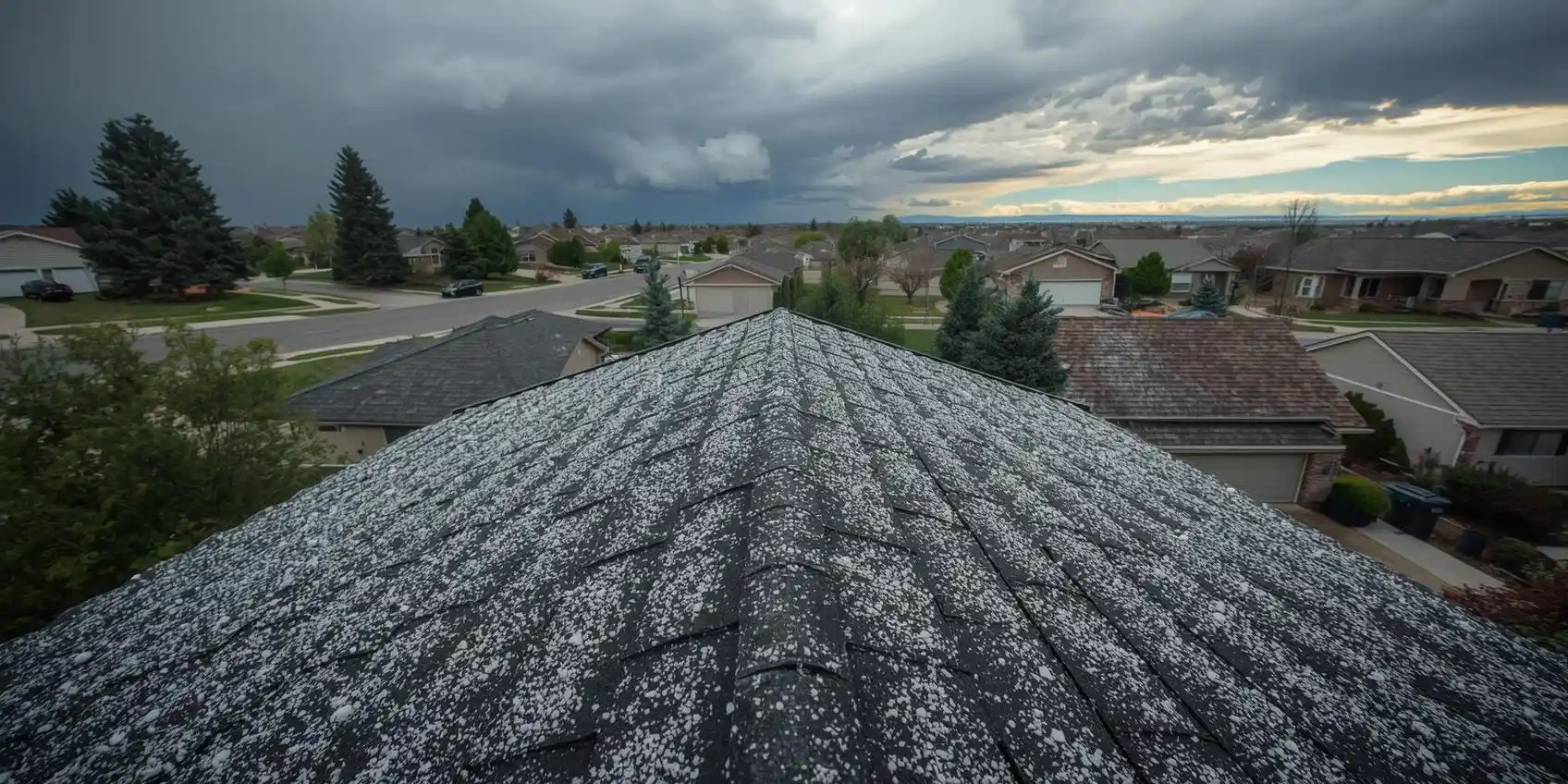
What to Know About Hail Damage Roof Insurance Claims in Denver
High Impact Team
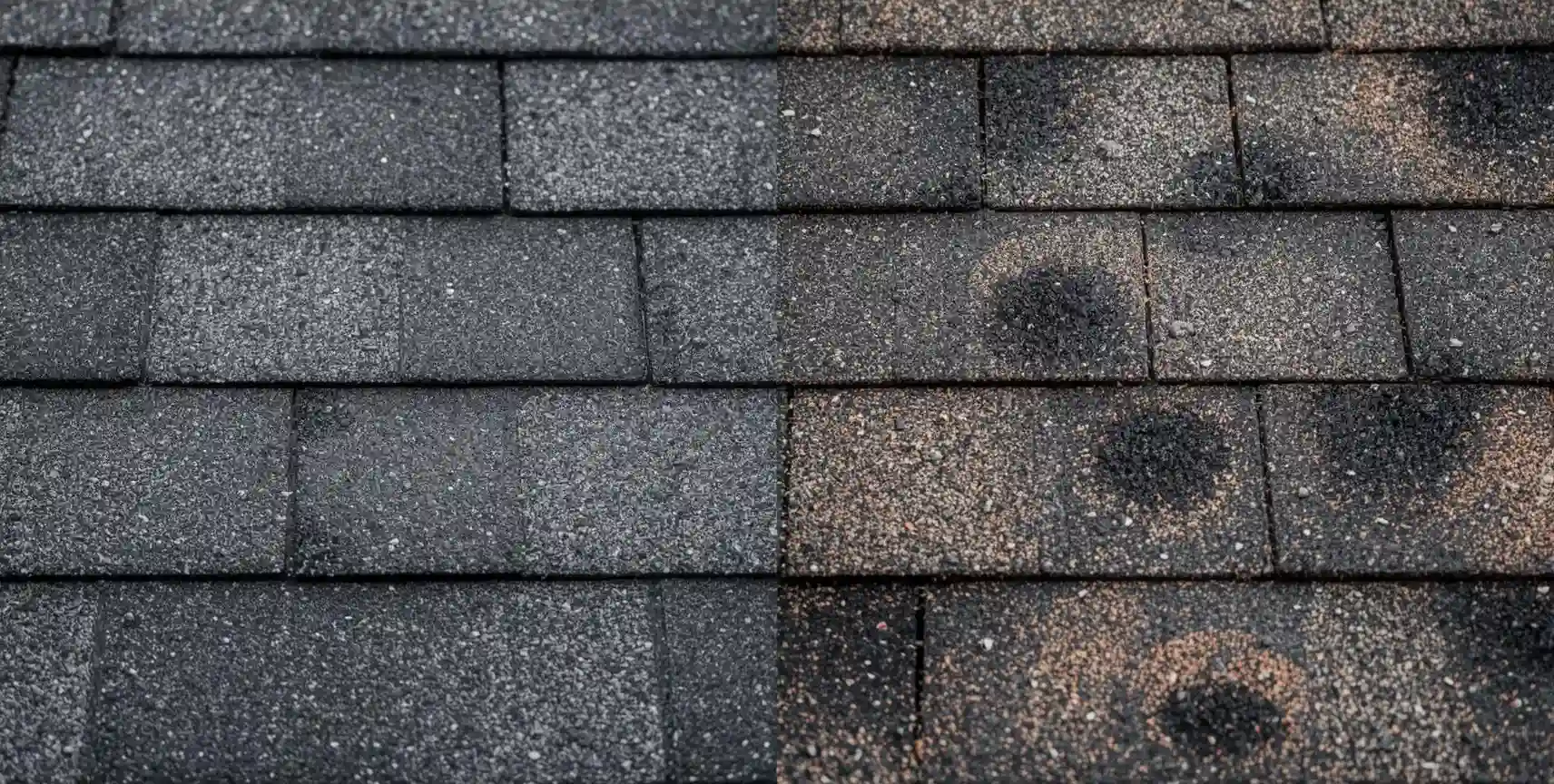
What Does Hail Damage Look Like on a Roof? (What Most Homeowners Miss)
High Impact Team