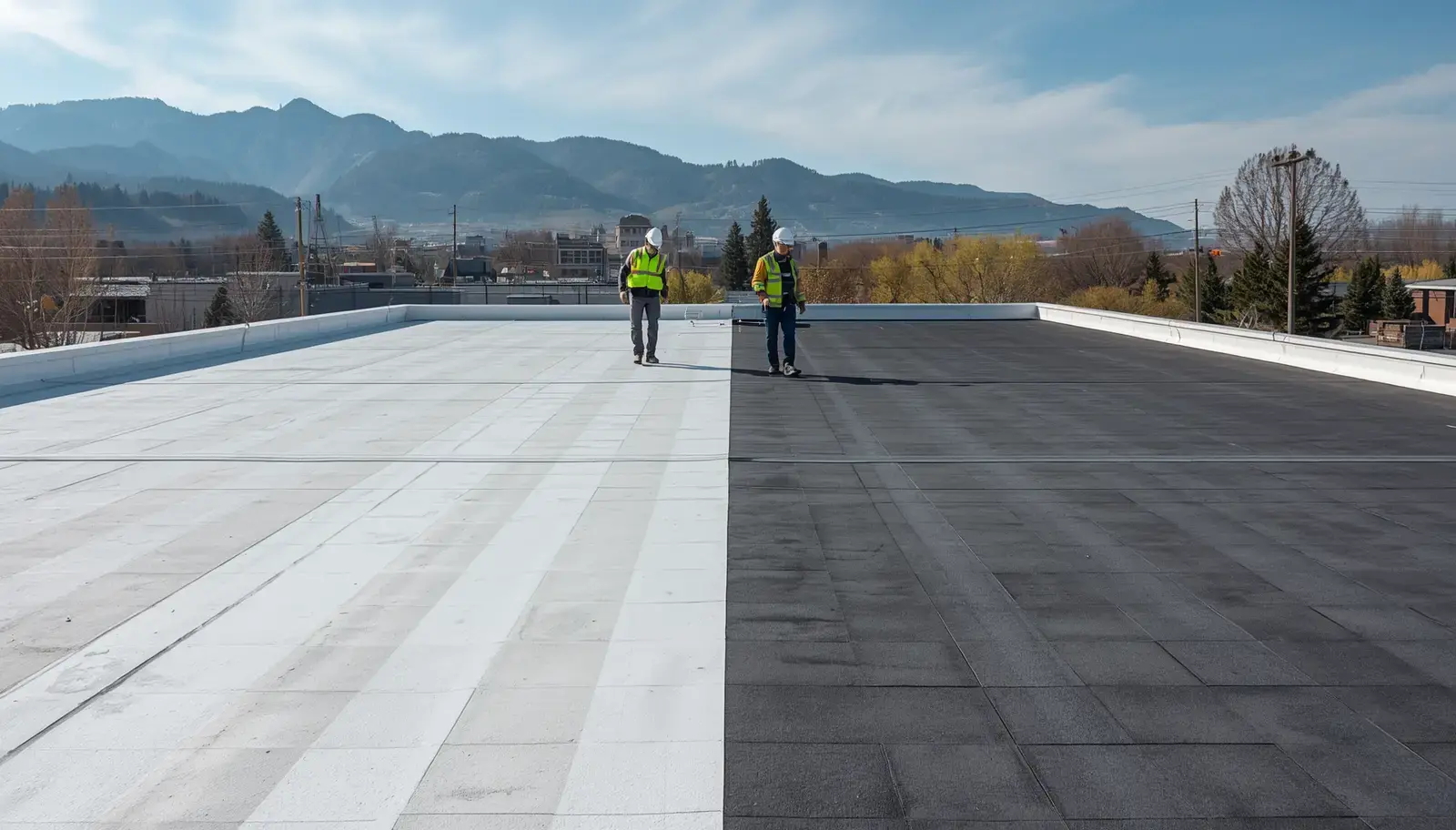
When comparing TPO roofing vs EPDM, commercial property owners, HOA boards, and property managers often ask the same question: which system will perform best over the long term?
The answer depends on your building, your priorities, and how each system will perform in Colorado's climate. From hailstorms and intense UV exposure to snow and freeze-thaw cycles, Denver's climate places significant demands on commercial flat roofing systems.
In our experience, most commercial roof failures are not caused by choosing TPO instead of EPDM. They're caused by poor installation, seam failures, or overlooked details around drains, flashing, and roof penetrations. Both systems can perform exceptionally well when installed correctly, which is why choosing the right contractor is often just as important as choosing the right material.
What Are TPO and EPDM Roofing Systems?
When property owners begin evaluating commercial flat roofing options, TPO and EPDM are two of the systems they will encounter most often. Both are single-ply membrane roofing systems designed for low-slope and flat commercial buildings, and both have been used successfully across Denver and the Front Range for many years.
While they serve the same purpose, they achieve it in different ways. TPO is known for energy efficiency and heat-welded seams, while EPDM has built its reputation on flexibility and decades of proven performance.
Understanding how each system works can make it easier to determine which option aligns best with your building's needs, budget, and long-term goals.
How TPO Roofing Works
TPO (Thermoplastic Polyolefin) is a synthetic roofing membrane designed to create a watertight barrier across a flat or low-slope roof.
The material is installed in large sheets, with seams fused together using heat. Because the seams are welded rather than adhered, many owners appreciate TPO's ability to create a strong, continuous waterproof system.
One reason TPO has become increasingly popular in commercial roofing is its reflective white surface. By reducing heat absorption, TPO can help improve energy efficiency and lower cooling demands during Colorado's sunny summers.
We often see TPO selected for newer buildings and full roof replacement projects where owners are focused on durability, lifecycle value, and energy savings.
How EPDM Roofing Works
EPDM (Ethylene Propylene Diene Monomer) is a durable synthetic rubber membrane that has been used in commercial roofing for decades.
Depending on the project, EPDM systems may be fully adhered, mechanically fastened, or ballasted. Its flexibility allows it to perform well under changing temperatures, which is one reason it has maintained such a strong reputation throughout the industry.
In many cases, property owners and property managers choose EPDM because of its long track record. We often see EPDM used on buildings where budget is a consideration or where an existing EPDM system is being repaired or expanded.
TPO vs EPDM Performance in Colorado's Climate
Choosing between TPO and EPDM isn't just about comparing two roofing materials. It's also about understanding how those materials perform in the environment where your building actually exists.
Colorado's climate creates challenges that commercial roofs in other parts of the country may never experience. Along the Front Range, buildings are exposed to intense UV radiation, severe hailstorms, heavy snow loads, and repeated freeze-thaw cycles throughout the year.
That's why we encourage owners to evaluate roofing systems based on local performance rather than national averages. A system that performs well in one region may not always be the best fit for Colorado conditions.
How Each System Handles Hail and Impact
For many commercial property owners in Denver, hail resistance is one of the first concerns that comes up, and for good reason. Colorado regularly experiences severe weather events that can shorten the life of a roofing system if it isn't properly specified.
Both TPO and EPDM can perform well in hail-prone environments, but in our experience, membrane thickness often matters more than membrane type. A thicker membrane installed correctly can have a greater impact on long-term durability than whether the system itself is TPO or EPDM.
TPO membranes generally provide excellent puncture resistance, while EPDM's flexible rubber composition helps absorb impacts differently. Both systems can be successful in Colorado when paired with proper installation and ongoing maintenance.
We've also seen severe hail events result in full commercial roof replacements. In Colorado, flat roofs can sustain enough damage to trigger insurance claims, just like residential roofing systems.
For HOA boards and property managers, understanding the condition of the roof before and after a storm can be critical for documentation, reserve planning, and insurance discussions.
Regardless of the material, we recommend scheduling inspections after major storms. Identifying potential hail damage early can help prevent small issues from turning into larger repairs. If your building has recently experienced severe weather, scheduling a professional roof inspection can help identify issues before they become more expensive repairs.
UV Exposure, Heat, and Colorado Sun
Colorado's elevation means commercial roofs receive a tremendous amount of sunlight throughout the year. Over time, that constant UV exposure can affect roofing materials and energy performance.
One reason many owners choose TPO roofing is its reflective white surface. By reducing heat absorption, TPO can help lower cooling demands and improve energy efficiency during Denver's hot summer months.
Traditional EPDM membranes are black and absorb more heat. While this may increase cooling costs during the summer, some owners appreciate the additional heat retention during colder periods.
For buildings with high cooling demands, we often see TPO become the preferred option because of its energy-saving potential.
Cold Weather, Snow, and Freeze-Thaw Cycles
Colorado winters create another challenge for commercial roofs. As temperatures fluctuate, roofing materials repeatedly expand and contract, placing stress on seams and attachment points.
One advantage we appreciate with EPDM is its ability to remain flexible even during extreme cold. That flexibility has helped make it a reliable option for commercial buildings in climates that experience significant temperature swings.
TPO systems, on the other hand, rely heavily on properly welded seams. When installed correctly, those seams create a durable, waterproof barrier capable of performing well through Colorado's changing seasons.
Ultimately, both systems can perform well in Colorado. Success often comes down to proper design, installation quality, and ongoing maintenance. The key is ensuring the roof is designed and installed with local weather conditions in mind.
Cost Comparison: TPO vs EPDM for Commercial Flat Roofing
Cost is often one of the first considerations when evaluating options for commercial flat roofing, but upfront pricing only tells part of the story.
As a general guideline:
Actual costs vary based on membrane thickness, insulation requirements, roof access, existing tear-off requirements, drainage conditions, and overall project complexity.
One thing we regularly explain to owners, HOA boards, and property managers is that roofing proposals are rarely apples-to-apples.
Two contractors may recommend the same material while including very different scopes of work, warranties, or installation details.
If you're comparing multiple roofing proposals and aren't sure what's included, our team can help you review the scope and understand the differences.
That's why we encourage owners to evaluate the total value of the roofing system over its lifespan rather than focusing solely on the initial proposal. Installation quality, maintenance requirements, and long-term performance often have a greater impact on ownership costs than the membrane itself.
Insurance considerations can also affect long-term costs. Following major hail events, commercial property owners and HOA boards may face many of the same Actual Cash Value (ACV) versus Replacement Cost Value (RCV) discussions that residential owners encounter.
Understanding your policy and documenting storm damage properly can have a significant impact on future repair and replacement decisions.
Upfront Installation Costs
One reason commercial roofing estimates can vary so widely is that no two buildings are exactly alike. Factors such as roof size, access, insulation requirements, drainage conditions, penetrations, and existing tear-off work all influence the final scope and cost.
In general, TPO systems tend to carry slightly higher upfront installation costs because heat-welded seams require specialized labor and equipment. EPDM systems are often slightly less expensive to install, although that difference can vary from project to project.
Many property owners are surprised to learn that insulation upgrades, drainage improvements, and roof details can sometimes have a greater impact on cost than the membrane itself.
Long-Term Maintenance and Repair Costs
Many owners focus heavily on installation costs but underestimate the impact maintenance can have over the life of the roof.
Both TPO and EPDM systems require periodic inspections and preventative maintenance to maximize their lifespan, but they age differently and may require different repair approaches over time.
EPDM has a long history of performance, but because many systems rely on adhesives, seams can separate over time if the roof was not installed correctly or if maintenance has been neglected. Depending on the extent of the damage, EPDM repairs can often be completed without replacing large sections of the roof.
TPO systems use heat-welded seams rather than adhesives, which many owners appreciate because they create a strong, watertight bond. When properly installed, these seams tend to provide excellent long-term performance and may reduce the likelihood of seam-related leaks.
In our experience, most long-term roofing issues are tied more closely to workmanship around penetrations, drains, flashing details, and roof transitions than to the membrane itself.
A roof that costs less upfront can ultimately become more expensive if maintenance needs, repairs, or energy performance are overlooked during the decision-making process. Regular inspections and preventative maintenance can help extend the life of both TPO and EPDM systems while identifying small issues before they become larger expenses.
Lifespan and Warranty Expectations
Both TPO and EPDM are capable of delivering long-term performance when properly installed and maintained.
In general:
-
TPO roofs typically last approximately 20-30 years.
-
EPDM roofs typically last approximately 25-30 years, with some systems exceeding that lifespan when well maintained.
Actual longevity depends on factors such as membrane thickness, maintenance practices, weather exposure, and installation quality.
Manufacturer warranties also vary between systems. Depending on the product and roofing assembly, warranties may range from 10 to 30 years and can cover materials only or both materials and workmanship.
One thing we regularly explain to owners is that warranties often come with specific installation requirements. Proper attachment methods, approved accessories, and manufacturer guidelines all play a role in maintaining warranty coverage.
This is one reason we emphasize working with experienced, certified contractors. Improper installation can affect both long-term performance and warranty eligibility, regardless of which membrane is selected.
We generally encourage owners to think about roofing as a long-term asset rather than a short-term expense. In many cases, investing in proper installation and preventative maintenance provides a better return than simply choosing the lowest initial bid.
Insurance Considerations for Commercial Flat Roofs in Colorado
Severe hail events don't just affect residential roofs. Commercial flat roofs can also sustain enough damage to require major repairs or full replacement.
For many buildings, insurance considerations can play a significant role in long-term roofing decisions. The age of the roof, the type of coverage in place, and how storm damage is documented can all influence what happens after a major weather event.
How Hail Claims Affect TPO and EPDM Roofs
Both TPO and EPDM systems can be damaged by hail, and we've seen severe storms result in full commercial roof replacements throughout Colorado.
In many cases, the condition of seams, insulation, drainage areas, and penetrations becomes just as important as the membrane itself when evaluating storm damage.
For HOA boards and property managers, documenting roof conditions before and after storms can support reserve planning, maintenance decisions, and insurance discussions.
Understanding ACV vs RCV Coverage
Many commercial policies include Actual Cash Value (ACV) or Replacement Cost Value (RCV) provisions. Depending on the policy and the age of the roof, those differences can significantly affect out-of-pocket costs after a loss. For older roofs, those differences can significantly affect reserve planning and potential out-of-pocket expenses following a major storm.
Because policy language varies, we encourage owners and property managers to understand their coverage and work with experienced professionals who can help document damage and support the claims process.
Which System Is Right for Your Commercial Property?
After comparing performance, maintenance, and costs, many property owners ask the same question: which system should I choose?
The reality is that there is no universal answer. The right roofing system depends on your building, your priorities, and how long you plan to own the property. For HOA boards and commercial property managers, reserve studies, capital improvement plans, and long-term maintenance budgets often play an important role in the decision as well.
In our experience, the decision usually comes down to a handful of practical considerations:
-
Is energy efficiency a priority?
-
Are you planning a full roof replacement or repairing an existing system?
-
Is upfront budget the primary concern?
-
How important are long-term maintenance and lifecycle costs?
-
Does the building face significant hail exposure or temperature swings?
-
Rather than asking which material is "better," we encourage owners to ask which material is better for their specific situation.
The good news is that both TPO and EPDM have proven themselves in Colorado. The key is matching the system to the building rather than forcing the building to fit the system.
When TPO Is the Better Choice
We often recommend TPO for commercial property owners who are focused on energy efficiency, long-term watertight performance, and complete roof replacement projects.
Because TPO uses heat-welded seams and reflective membranes, it is commonly selected for buildings with significant sun exposure or owners looking to reduce cooling demands.
TPO may be a good fit if:
- Energy efficiency is a priority
- The project involves new construction or full replacement
- The building experiences significant UV exposure
- Long-term seam performance is important
- Owners prefer the security of heat-welded seams
In our experience, TPO is frequently chosen by owners planning to hold their properties long term and looking for a balance between durability and energy performance.
When EPDM Is the Better Choice
EPDM remains one of the most trusted commercial roofing systems because of its long track record and ability to perform in challenging climates.
We often see EPDM selected when owners are working within tighter budgets, repairing existing EPDM systems, or prioritizing cold-weather flexibility.
EPDM may be the better choice when:
- Budget is the primary concern
- Existing EPDM sections need repair or integration
- Extreme cold weather performance is important
- Owners value a proven roofing system with decades of history
For many buildings, EPDM provides a practical and dependable solution without sacrificing reliability.
We also commonly see EPDM selected when owners are looking to extend or tie into an existing EPDM system, since maintaining compatibility can simplify future repairs and maintenance.
Questions to Ask Your Commercial Flat Roofing Contractor
Choosing the right membrane is only part of the decision. The contractor installing the system often has just as much impact on long-term performance as the material itself.
Regardless of which option you're considering, we encourage owners to ask questions such as:
-
What membrane thickness do you recommend for this building?
-
Which system do you have the most experience installing?
-
How many TPO and EPDM projects has your company completed?
-
What manufacturer warranties are available?
- How do you document storm damage and support insurance claims if severe weather occurs?
-
How do you handle penetrations, drains, and edge details?
-
What maintenance should I expect over time?
One mistake we see owners make is focusing entirely on material selection while overlooking installation experience.
In many cases, the quality of the installation has a greater impact on roof performance than whether the system is TPO or EPDM.
Whether you're leaning toward TPO or EPDM, taking time to ask these questions can help you make a more informed decision.
If you'd like to discuss your building and explore your options, our team is always happy to answer questions before a project moves forward.
How High Impact Approaches Commercial Flat Roofing in Denver
At High Impact Roofing & Exteriors, we believe every commercial property deserves a roofing solution tailored to its specific needs.
Rather than recommending the same system for every building, our team evaluates drainage, insulation, existing roof conditions, long-term ownership goals, and maintenance expectations before making recommendations.
We install both TPO and EPDM systems and focus heavily on detailed scopes of work, documentation, communication, and project management throughout the process.
For HOA boards and commercial property managers, that process helps support reserve planning, maintenance decisions, and insurance documentation after severe weather events.
Because we install both systems, our recommendations are based on the building rather than a preferred product. That allows us to focus on what will provide the best long-term outcome for each property.
Our goal is to help owners understand exactly what is being installed and avoid surprises during construction.
Whether you're planning a replacement project or evaluating an existing roof, our team provides commercial roof inspections throughout Denver and the Front Range.
Learn more about our commercial flat roofing services, explore what to expect from a flat roofing project in Denver, or learn more about our team and the experience behind our commercial roofing projects.
Frequently Asked Questions: TPO vs EPDM
Get a Commercial Flat Roofing Assessment in Denver
For most commercial buildings, there isn't a universally better roofing system. There is only the system that's best for your building, your budget, and your long-term plans.
That's why our process starts with understanding the property first and recommending materials second.
High Impact Roofing & Exteriors provides commercial roof assessments throughout Denver and the Front Range. Whether you're comparing TPO and EPDM, planning a replacement, or evaluating storm damage, our team can help you determine the right solution for your building.